
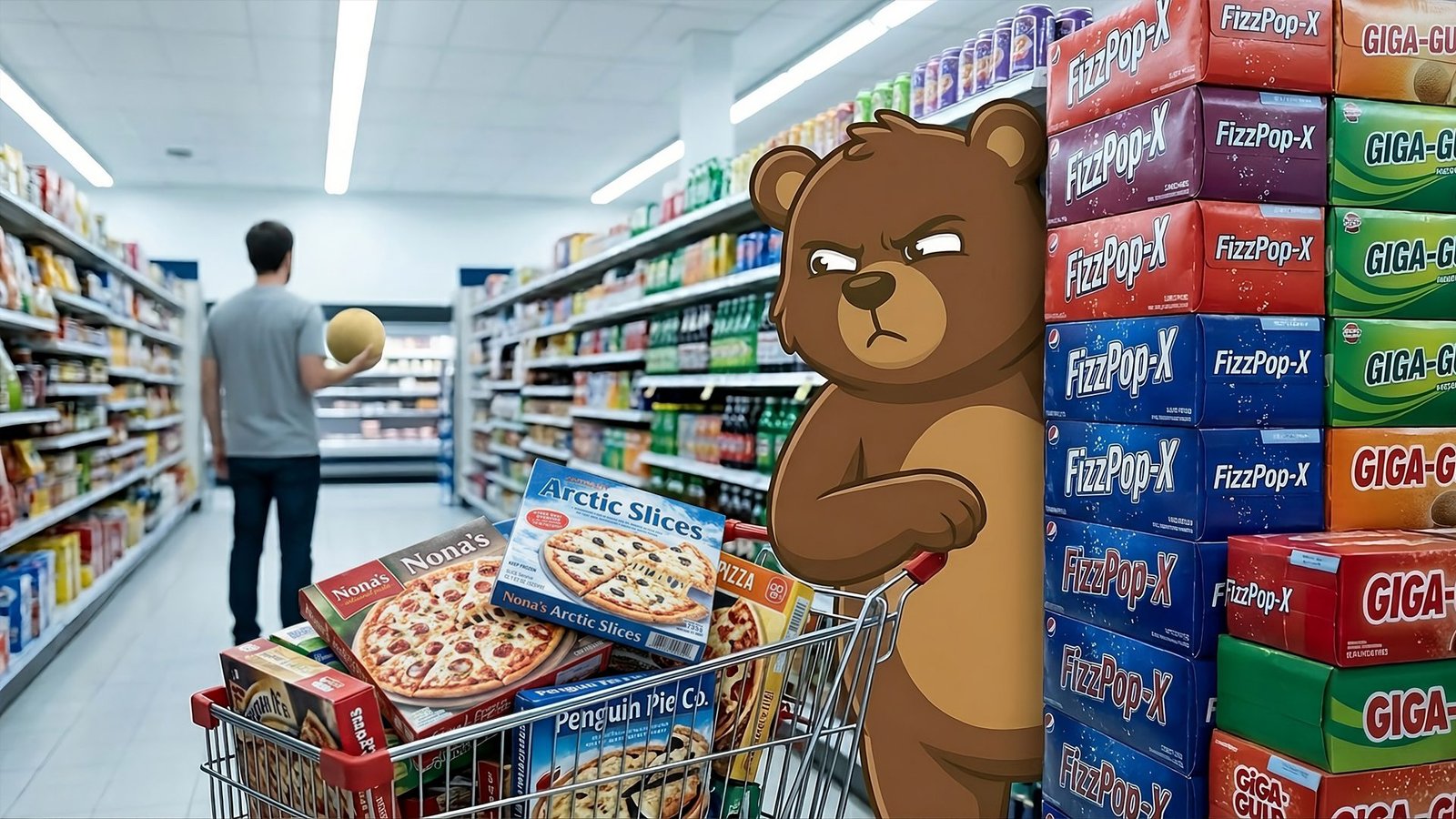
Foraging is an unfortunate biological necessity. I rely heavily on delivery drivers to bring sustenance directly to my den, but occasionally, a catastrophic failure in inventory management occurs. You run out of premium snacks on a Tuesday night, and you are forced to enter the fluorescently lit nightmare known as the grocery store.
This is already a high-stress environment. The carts have squeaky wheels, the temperature in the dairy aisle is aggressively cold, and they constantly rearrange the cereal. But the greatest danger in the grocery store is not the lighting or the layout.
It is the casual acquaintance.
You are standing in Aisle 4, calculating the exact number of frozen pizzas required to survive until Sunday, when you see them. It is a coworker, or a neighbor, or someone from a party you attended three years ago. They are holding a melon. They are looking around. If they make eye contact, you will be trapped in a twenty-minute conversation about the weather while your ice cream melts.
Here is the official tactical protocol for surviving a grocery store encounter without exchanging a single word.
1. The 180-Degree Phantom Pivot The moment visual confirmation is established, you must act before they process your face. Do not gasp. Do not freeze. Execute a smooth, silent, 180-degree pivot. If you were walking toward the pasta, you are now urgently walking toward the paper goods. It does not matter if you do not need paper goods. You live in the paper goods aisle now.
2. Intense Label Scrutiny If a pivot is impossible because they are coming down your aisle, you must deploy the camouflage of deep, intellectual focus. Grab the nearest, least interesting item on the shelf. A can of garbanzo beans. A bottle of specialized floor cleaner. Hold it six inches from your face. Furrow your brow. Look absolutely mesmerized by the nutritional information or the warning label. If you look like you are making a critical, life-altering decision about sodium content, most people will not interrupt you.
3. The Blind Spot Navigation Grocery stores are full of architectural blind spots. Endcaps, promotional displays of soda boxes, and the towering freezer doors are your best friends. Keep a solid, physical object between you and the threat at all times. Track their movements using the curved security mirrors installed in the ceiling corners. You are a bear in the wild; use the terrain to your advantage.
4. The Cart Sacrifice If you are pushing a cart with a squeaky wheel, you are essentially ringing a bell to announce your location. If the threat is closing in, you must be prepared to abandon the cart. Leave it seamlessly next to the canned soups and walk away. Yes, you will have to gather your snacks all over again later. But a minor delay in foraging is a small price to pay to avoid answering the question, “So, what have you been up to?”
5. The Self-Checkout Sprint Once your items are secured, proceed immediately to the self-checkout. Human cashiers are a lovely concept, but they require small talk, and small talk slows you down. Scan your items with the ruthless efficiency of a machine. Bag them haphazardly. Pay and exit the sliding doors.
Only when you are safely back in your car, with the doors locked and the engine running, can you finally exhale. You have successfully navigated the most dangerous terrain in modern society. You have secured your snacks, protected your peace, and most importantly, you did not have to pretend you were happy to see anyone.
Go home. Put on your softest fleece. You’ve earned it.
